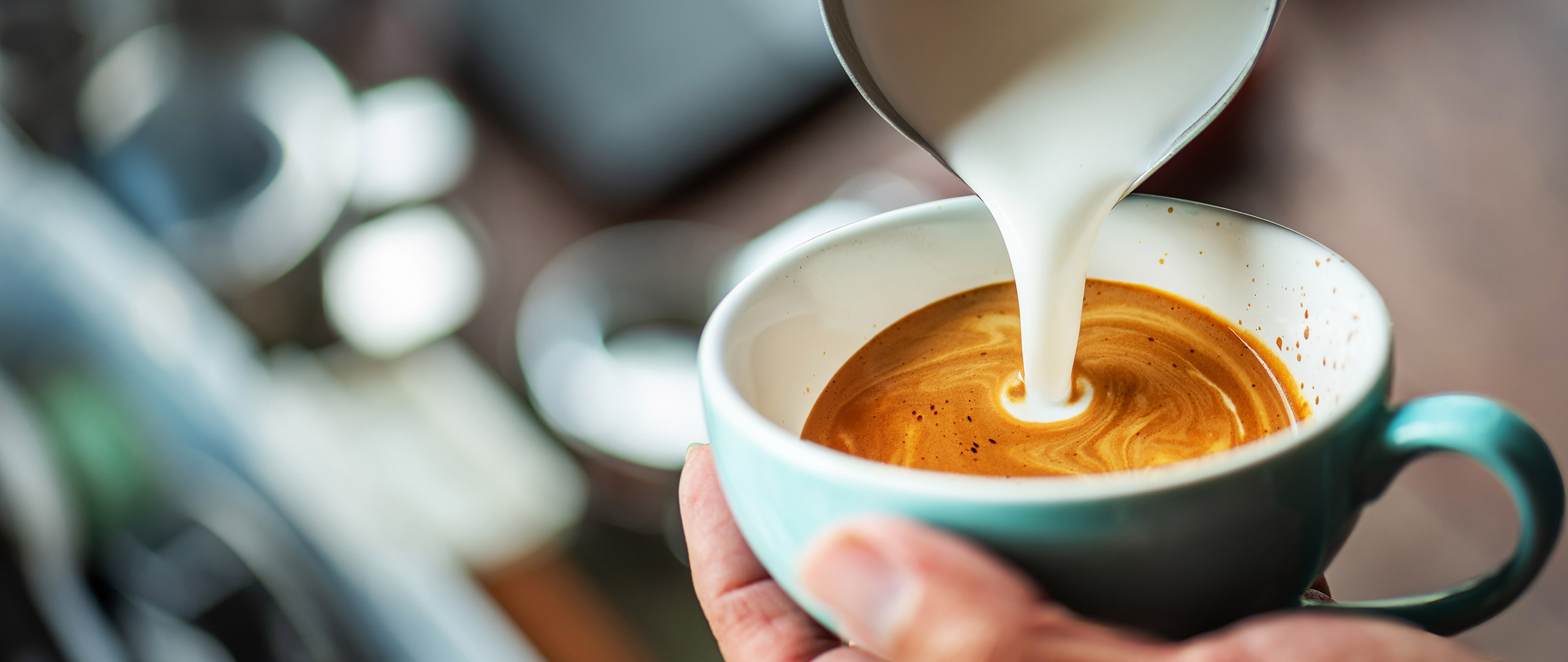
Milk quality today means much more than taste and food safety – it’s also about animal welfare, sustainability and farm efficiency. DeLaval is empowering dairy farmers to meet the highest customer, consumer and regulatory demands through its industry-leading products and services.
As customers and consumers increasingly expect the dairy industry to optimise animal welfare and reduce environmental impact, farmers are finding that cow wellbeing and sustainability go hand in hand with productivity. Healthier cows and more efficient practices don’t just meet modern standards – they also ensure better quality milk.
Milk quality – the visible result of invisible systems
While cleaning and disinfection lay the groundwork, today’s farms go further with innovative systems that boost efficiency, protect animal health and ensure premium milk quality. Take, for example, the various sensors used to monitor cow behaviour, reproduction and the milking process, which help promote better cow health, reduce illness and support greater longevity.
“Our sensors monitor everything from how much each cow is eating, drinking and laying down to alert the farmer to any deviations in her behaviour that may indicate she is at risk of disease,” said Dragana Lazovic, Senior Specialist, Milking Performance at DeLaval.

When it comes to robotic milking, the DeLaval VMS™ can be equipped with DeLaval BioSensor Milk Cell Analysis (MCA), which measures a cow’s somatic cell count during milking to provide farmers with key indicators of milk quality and udder health, helping them respond more quickly.
DeLaval Flow-Responsive™ Milking in the VMS is the latest innovation designed to promote cow health and improve milk quality. By automatically adjusting to the milk flow, it enables faster and gentler milking that improves cow welfare and increases the potential for greater farm profitability by being able to milk more cows per robot each day.
“Faster and more precise milking means a lower risk of teat damage and consequently udder health issues,” explained Lazovic. “This results in happier, more relaxed cows that can spend more time resting and socialising, which is good for cow wellbeing, production efficiency and ultimately milk quality by helping to reduce the risk of ill health. After all, a healthy cow provides more milk, of better quality, and for a longer period.”
Making life easier for farmers
Another aspect of quality relates to people and the importance of helping dairy farmers and workers to find a good work-life balance. DeLaval provides comprehensive training to its personnel and dealers, who help farmers to get the most out of DeLaval products and services.
“We are increasing our customer advisory efforts by establishing a dedicated department focused entirely on helping farmers understand how to interpret and make the best use of their data,” added Lazovic. “These services will become increasingly important in the future as farms become even more data driven, which will make life easier for farmers.”
Shaping the future of dairy quality
DeLaval’s holistic approach to dairy farming with the cow firmly in the centre gives farmers everything they need to optimise milk quality.
“We will continue to shape the future of dairy quality by consistently improving our market-leading products and services,” concluded Lazovic. “Our focus on quality is not only good for dairy customers and consumers, but also the cows, farmer success and the environment.”
Enhancing quality at Hamra Farm and beyond
Milk quality is a central pillar of our recent expansion of DeLaval’s commercial dairy farm and Research and Development Centre in Tumba, Sweden, where improvements made on site are intended to inform and inspire farms worldwide.
Animal welfare was a top priority from the outset of the Hamra Farm expansion. Every detail – from barn layout and milking system to bedding, swinging cow brushes and ventilation – has been designed to promote cow comfort, which in turn supports sustainable and productive farming.
The barns are equipped with DeLaval’s advanced digital solutions that support cow health and reproduction, using artificial intelligence (AI) to identify cows at risk of illness and to monitor behaviour, rumination and feeding patterns – all contributing to improved milk quality and udder health.


A trailblazer to lead the way on quality throughout the dairy value chain
“The expansion of Hamra Farm enables us to create optimal conditions for our animals, make wise use of our own resources, and enhance both efficiency and productivity,” said Johan Bjurevall, Managing Director of Hamra Farm. “The new systems are already making a positive impact – our cows are adapting well, and early results are encouraging. By sharing our experience at Hamra Farm, we hope to inspire and support other farmers who come to visit.”
Hamra Farm plays a vital role in DeLaval’s innovation efforts and is home to our dedicated Research and Development Centre. Here, new dairy technologies are developed and tested, in many cases in collaboration with leading universities. The farm complements this work by providing a real‑world setting where the solutions are used operationally and demonstrated to customers.
Ultimately, the enhanced capabilities and capacity brought by the expansion significantly strengthen DeLaval’s ability to drive quality and progress across the dairy value chain.
